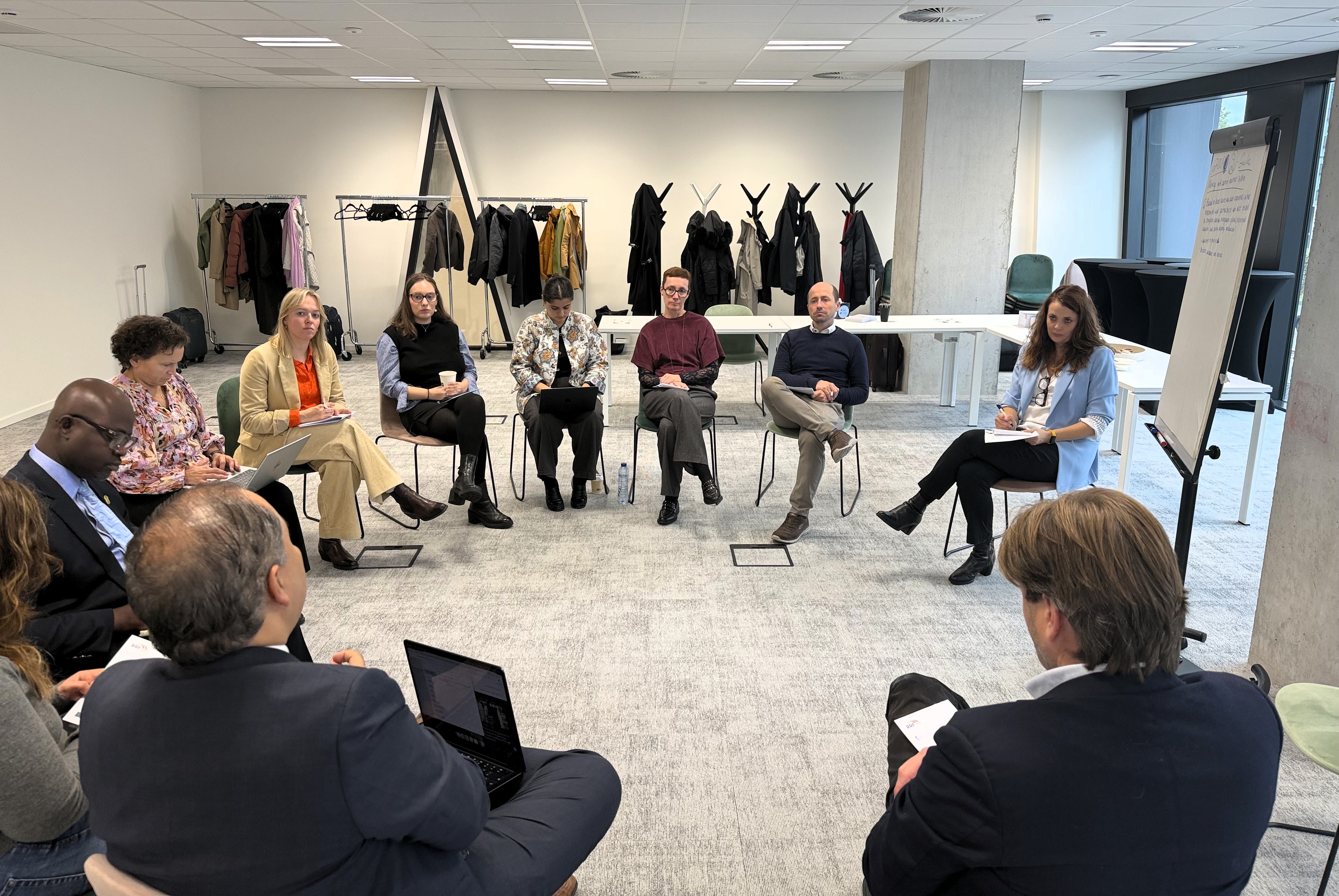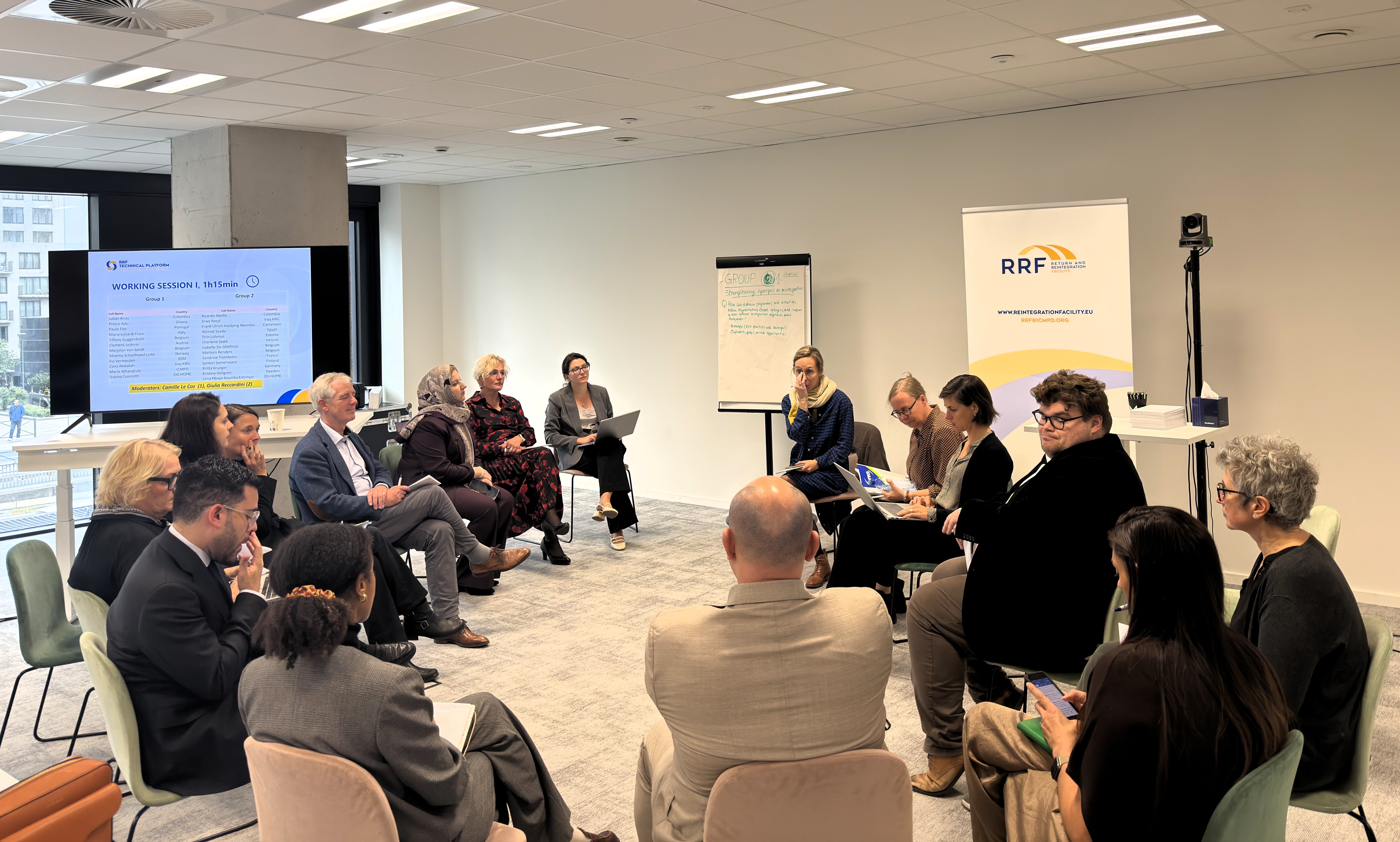

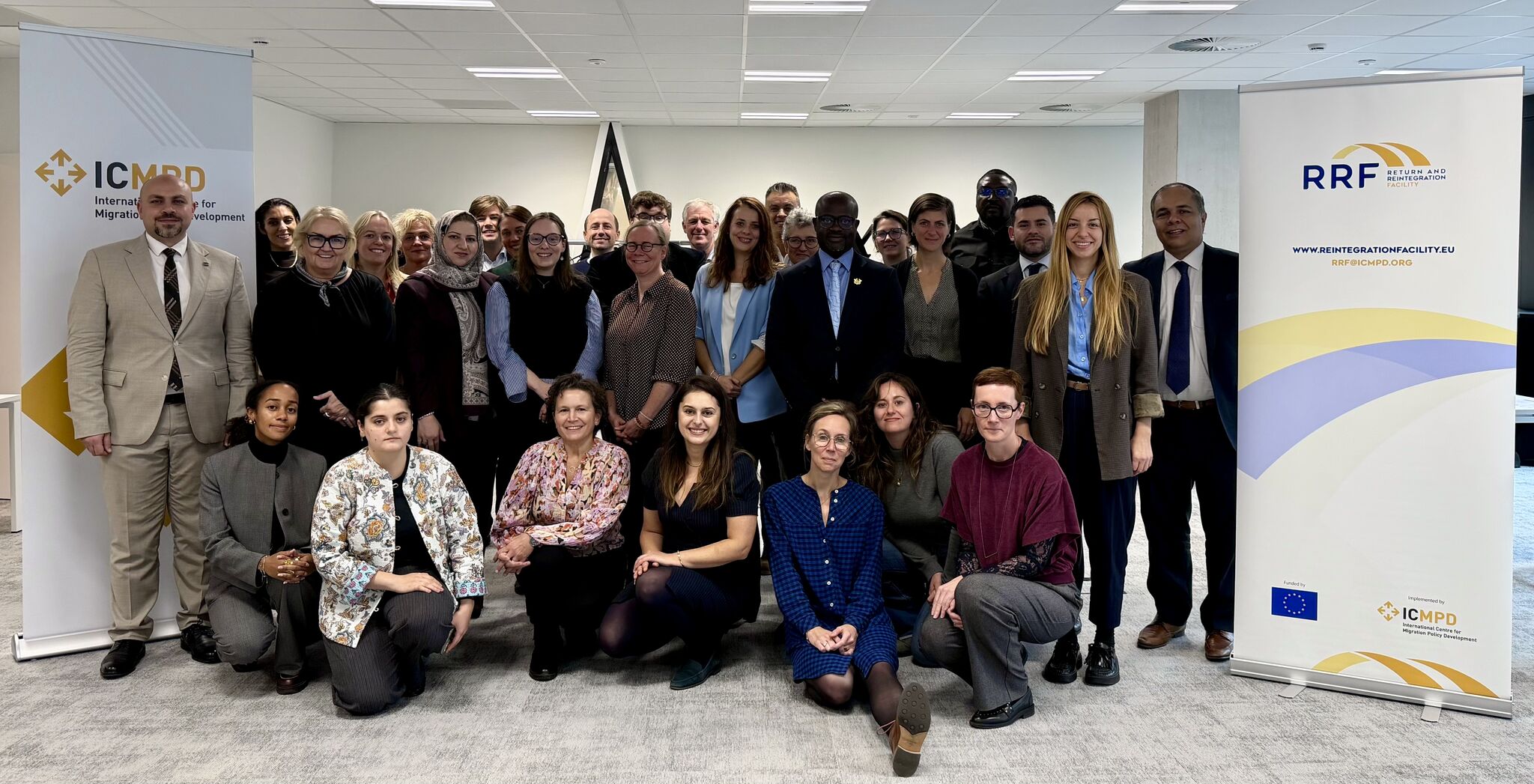
On 21 October, the Return and Reintegration Facility (RRF) officially launched the Technical Platform on Referral Pathways and Reintegration Cooperation (the Platform), jointly implemented by ICMPD and MPI-Europe. The kick-off meeting brought together representatives from 11 EU Member States, three development institutions, and six countries of origin: Cameroon, Colombia, Egypt, Ethiopia, Ghana, and the Kurdistan Region of Iraq (KRI).
Held in an open, informal, and practice-oriented setting, the event provided a space for dialogue among key stakeholders working on return, reintegration, and development. Participants explored opportunities to strengthen mutual understanding, improve cooperation, and establish a common foundation for collaboration over the next three years.
Discussions focused on how the Platform can support engagement and commitment towards more sustainable reintegration outcomes. Participants examined the added value of bringing together actors from relevant sectors and highlighted the importance of closer cooperation between return and reintegration stakeholders and development partners.
The plenary sessions introduced the Platform’s vision and three-year work plan while reflecting on lessons learned from two recently concluded initiatives: the RRF Technical Working Group on Reintegration and Development and the Community of Practice on Return and Reintegration, funded by the Migration Partnership Facility (MPF) and implemented by MPI Europe.
The plenaries were followed by two interactive sessions. The first allowed participants to exchange experiences and identify ways to enhance collaboration and mutual support across the two sectors. In the second, participants discussed how to further improve alignment with national priorities, strengthen institutional capacities, and advance country ownership of reintegration policies and programmes.
Key Messages from the Kick-Off Meeting
Participants underscored the importance of strengthening information-sharing, enhancing referral pathways and their integration with national systems, and generating robust evidence on long-term reintegration outcomes. Discussions also highlighted the need for greater coordination among stakeholders, evaluation and learning frameworks, and the development of practical outputs, including recommendations, knowledge products, and structured opportunities for continued exchange and cooperation.
Looking Ahead
In the closing session, participants recognised the Platform as a timely and valuable initiative for fostering cooperation among key actors and advancing a more coherent approach to sustainable reintegration. Over the coming three years, the Platform’s activities will be structured around four complementary pillars:
- In-person meetings
- Online exchanges
- Development of knowledge products
- Follow-up webinars
By creating a dedicated space for dialogue, knowledge-sharing, and practical cooperation, the Platform aims to strengthen partnerships and support more effective and sustainable reintegration efforts across countries and regions.