
2025 was a year of consolidation and strategic advancement that brought the Return and Reintegration Facility (RRF) to new operational maturity. Building on previous achievements, the Facility strengthened its role as a trusted partner for supporting dignified return and sustainable reintegration, deepening cooperation with EU Member States and Schengen Associated Countries (collectively: MS), Frontex, and countries of origin (CoO). The year also marked a watershed step forward in digitalising reintegration processes, with the Reintegration Assistance Tool (RIAT) improving case management, monitoring, and operational planning.
2025 at a Glance
- 800+ returnees assisted with comprehensive support since 2023,including over 330 in 2025
- 900 participants trained across RIAT and RRF programmatic activities
- 92 RIAT training sessions delivered, equipping practitioners across the EU
- 6 training sessions on return counselling delivered to 5 MS building frontline capacity where it matters most
- 1 groundbreaking contract signed in the framework of the Cashless Transfer Project, marking a significant milestone
- 3 innovative pilot activities in CoO successfully tested – proof of concept for scalable solutions
- 4 referral desks established and operationalised, facilitating the connection between short-term support and longer-term assistance in CoO
These results demonstrate that the RRF is actively shaping harmonised, high-quality reintegration support across MS and strengthening cooperation between all relevant actors. This work also benefited from ongoing exchanges with relevant EU partners.
In this context, coordination with Frontex continued strategically and constructively, emphasising planning and implementing activities, enhancing communication, and providing a more coherent offer to MS.
Outreach and Return Counselling
Advancing Return Counselling Capacities
Strengthening return counselling capacities remained a strategic priority. Through the Return Counselling Lab, the RRF developed, in cooperation with experts, advanced learning tools for MS as well as civil society organisations, including two evidence-based practical guidebooks and training packages on:
- Return Counselling for Families with Children
- Empowering Women in Return Counselling
These deliverables are fully aligned with the EU Strategy on Voluntary Return and Reintegration, and directly support MS in operationalising and strengthening their capacities in return counselling. Training modules based on these materials are now being adapted to national contexts, ensuring immediate application in practice. These activities are implemented in close coordination with Frontex, ensuring alignment and coherence in the provision of counselling training to MS.
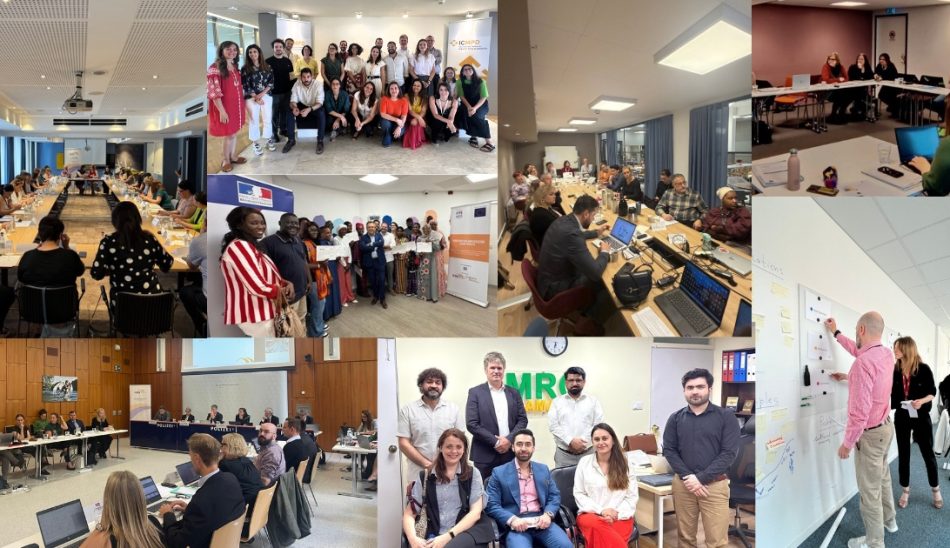
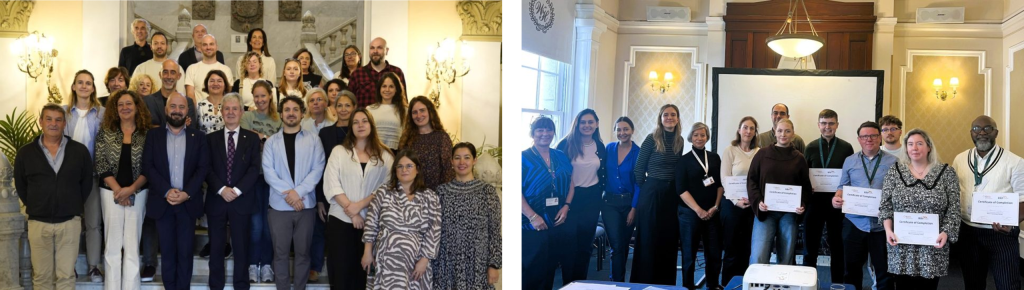
Key activities included training for the national authorities of France, Ireland and Sweden, Ireland, and France, as well as training for CSOs and private actors in Finland and Norway, demonstrating the breadth and adaptability of the RRF training model.
Enabling peer-to-peer exchange of practitioners
Following the successful completion of the Reaching Undocumented Migrants (RUM) project in January 2025, a follow-up initiative – Support to Frontline Workers (SFW) – was launched to create a dynamic learning community for practitioners to exchange experiences and best practices with their peers in other MS.
In 2025, this concept was piloted through a study visit to Bilbao (Spain), during which participants shared operational insights and practical approaches. This was complemented by an online forum, enabling continued engagement and community-building among frontline workers. SFW has proven to be a useful platform, and in 2026, additional study visits are planned with other municipalities across MS to further expand knowledge exchange.
Direct Services: Medical Assistance and Mobile Payments
The RRF continued to expand direct and complementary services to MS related to medical reintegration assistance, as well as innovative mobile payments through two projects:
- Medical Reintegration Assistance (MedRA+): 2025 marked the full year of implementation of the project, which has generated critical internal and external lessons learned on the provision of medical reintegration assistance to returnees. The referral period ended in November 2025, and the project entered a phase-out period. The knowledge and practical insights generated through MedRA+ will inform future programming and policy development.
- Cashless Transfer Project (CTP): Following the launch of procurement procedures and multiple consultations with MS, a contract has been signed with Red Rose, a leader in innovative cashless solutions in humanitarian contexts, to enable MS to offer digital mobile payment solutions for reintegration assistance pre-departure to returnees returning to Georgia, Jordan, Syria, and Iraq. This marks a significant step towards modernising reintegration delivery mechanisms.
Local Ownership and Referrals
Since 2023, over 800 returnees benefited from activities in this work area, including more than 330 in 2025, demonstrating strong uptake by MS. Nearly all planned activities were carried out, with expanded delivery across all projects and the completion of ERRIN Heritage projects. This includes Local Ownership Armenia (LOSRA), providing complementary reintegration services to returnees; PROSPECT, focusing on capacity development of national stakeholders and targeted interventions for vulnerable migrants; and the Sustainable Reintegration Iraq (SRI), offering additional reintegration services (such as business training and psychosocial support) to returnees to Iraq.
Strengthening Local Capacities
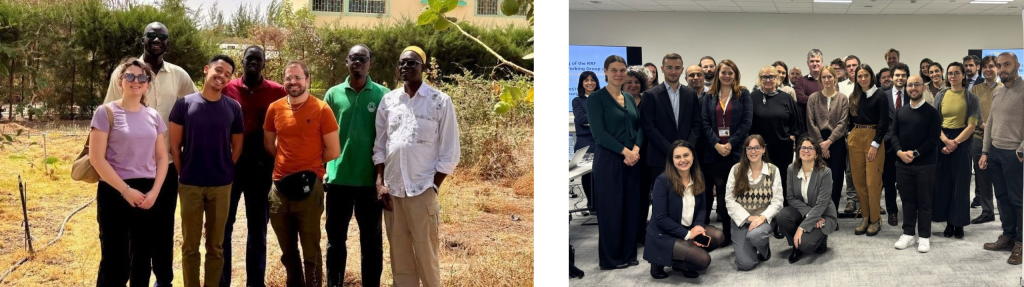
RRF continued its fruitful collaboration with OFII, strengthening capacities of national and local actors, reinforcing referral pathways, and promoting knowledge exchange to ensure sustainable reintegration and local ownership in countries of origin. In partnership with OFII, training, mentorship activities, and other innovative projects significantly enhanced the skills of reintegration actors and local authorities in Senegal, Georgia, and Côte d’Ivoire. Psychosocial support and sustainable business development training, provided by local reintegration partners, further enhanced reintegration assistance for benefitting returnees. In collaboration with ICMPD Armenia, RRF supported the coordination of return and reintegration actors in Armenia. In Nigeria, the Working Group on Return and Reintegration meetings offered platforms for sharing best practices and fostering national ownership.
Furthermore, RRF continued investing in developing effective referral mechanisms by piloting referral desks across various CoO. These activities aim to strengthen local capacities to manage referrals efficiently and support sustainable reintegration. Three OFII Referral Desks in Senegal, Côte d’Ivoire, and Georgia were established, as well as one Referral Desk in Pakistan, embedded within the Islamabad Migrant Resource Centre (MRC). These pilots already provided valuable insights and are demonstrating operational feasibility and scalable models suitable for future expansion.
Knowledge Exchange and Strategic Forums
Knowledge exchange was further strengthened through participation in strategic forums, including the 4th Mobility and Diaspora Forum in Senegal. In addition, RRF Reintegration Briefings in Tajikistan and Georgia facilitated direct engagement with national authorities and local actors, promoting practical learning, reinforcing referral mechanisms, and supporting sustainable reintegration practices. These initiatives contributed to a stronger local ecosystem and reinforced national ownership of reintegration processes.
A meeting of the Technical Working Group on Reintegration and Development (TWG R&D) brought together stakeholders from diverse sectors, including development actors. Rich participatory discussions centred on referral mechanisms and co-shaping the implementation of such activities in priority CoO to ensure alignment, relevance, and strong local ownership.
RIAT: The Digital Backbone of Modern Reintegration Case Management
In 2025, the Reintegration Assistance Tool (RIAT) continued to play a central role in digitalising reintegration case management and improving operational planning. It allows partners, such as those involved in the EU Reintegration Programme (EURP) led by Frontex, to deliver support based on applications submitted by MS, who can also manage their own reintegration programmes through the platform. This year marked exponential growth in users (1600+ users from all MS and across 50+ CoO) and system adoption, alongside major developments in functionality, usability, and strategic integration with other operational tools and stakeholders.
RIAT Growth and Adoption
RIAT experienced unprecedented growth in 2025, managing approximately 1,500 new cases per month, a testament to MS confidence in the platform. The system’s adoption by MS expanded, with Austria, Denmark, France and Germany leading national reintegration projects through RIAT, and decentralised operations increasingly implemented across participating countries, notably in Austria, Denmark and Sweden.
Digital Transformation and Operational Enhancements
Key improvements in 2025 included:
- Overall user experience upgrades to make the platform more intuitive.
- Conceptualisation of the Return Preparation module (KM0) to improve usability for counsellors.
- Streamlined referral workflows to speed up and simplify processes.
- Data Dashboard – a true game-changer for all actors, providing unprecedented real-time operational intelligence.
These enhancements allowed MS to track caseloads, improve service delivery, and plan interventions based on up-to-date information, fundamentally strengthening operational monitoring, decision-making, and policy planning.
Training, Support, and Strategic Integration
RIAT training and support continued to expand, with a significant uptake of Help Desk services, webinars, and guidance notes, enabling counsellors and partners to maximise the system’s potential. Continuous collaboration with Frontex ensured that RIAT remains a fit-for-purpose operational tool, aligned with EURP growth requirements.
Strategic Governance, Knowledge, and Communications
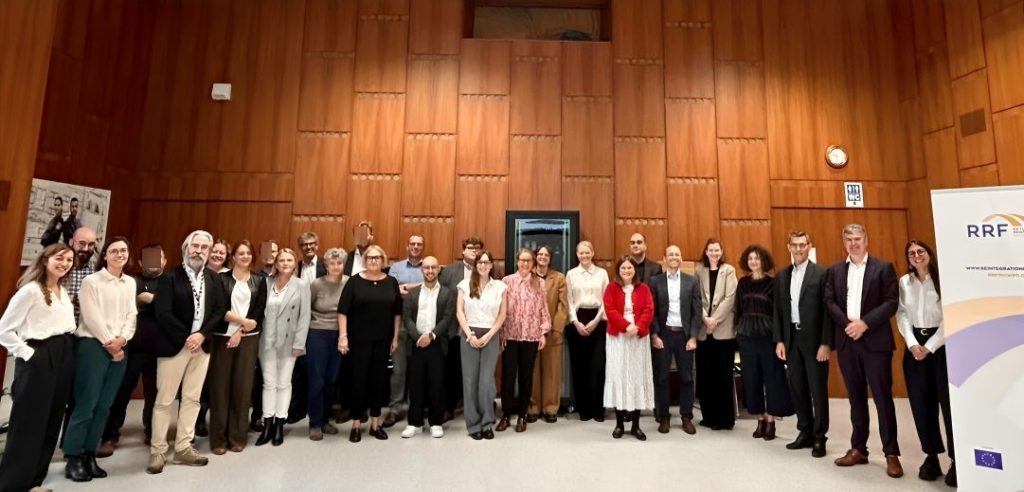
In 2025, the Facility Steering Committee (FSC) met twice (in Ghent and Vienna) to review achievements and set strategic priorities for programme implementation. Greater cooperation with ICMPD units and regions was established, internal workflows were optimised, communication channels were strengthened, and knowledge management processes were formalised, thereby enhancing coordination across units, departments, and regions and enabling more effective service delivery.
On the communications front, RRF efforts were highlighted in a dedicated episode of the ICMPD Migration Podcast, showcasing how the RRF supports humane, dignified, and sustainable returns, reinforces MS capacities, and promotes best practices across the EU network, bringing the human dimension of this work to broader audiences.
Looking Ahead to 2026
In 2026, the RRF will continue supporting MS by:
- Aligning activities with the Pact on Migration and Asylum and the upcoming Return Regulation.
- Continuing to strengthen capacities in return counselling, peer-exchange, and operational planning, in close coordination with Frontex.
- Expanding referral activities, incorporating lessons learned in 2025, and establishing referrals as a core activity of RRF.
- Scaling up RIAT functionalities for high-volume use and preparing the system for future needs.
- Enhancing knowledge management tools to harmonise reintegration systems and support evidence-based policymaking.