

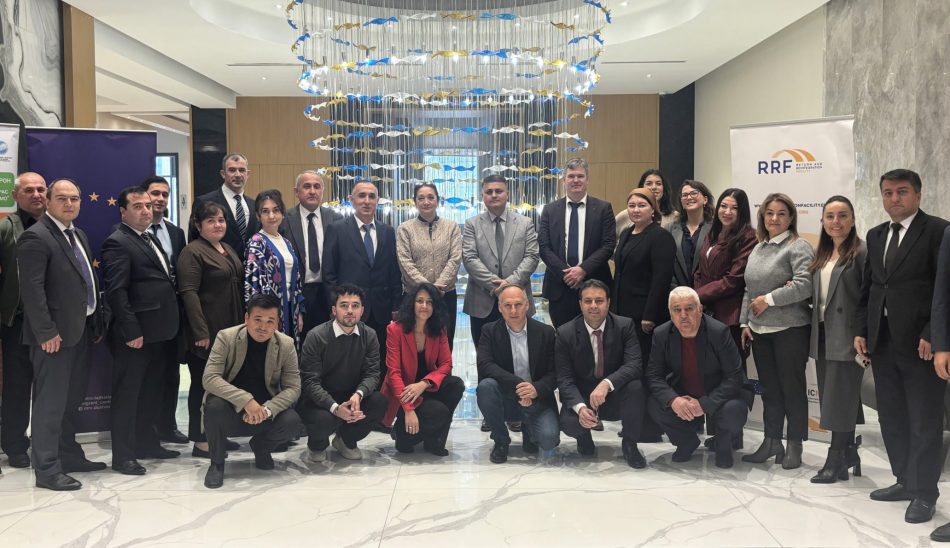
Dushanbe, December 2025 – Last week, the RRF successfully co-organised its second reintegration briefing, bringing together a diverse group of national and international stakeholders in Tajikistan. Hosted in collaboration with the International Centre for Migration Policy Development (ICMPD) Eastern Europe and Central Asia and colleagues from the Migrant Resource Centre, the event served as a platform for constructive dialogue, shared expertise, and collaborative vision-setting.
Returns to Tajikistan
Although most returnees come from the Russian Federation and Kazakhstan, the European Union is the third most significant host region, with Germany, Poland and the Baltic States accounting for the largest share of returnees. In 2024, a significant number of Tajik nationals returned to Tajikistan from European countries through voluntary or non-voluntary return procedures.
In this context, cooperation between Tajik institutions, EU Member States and international partners is essential to ensure continuity, transparency and predictability in the reintegration process.
A first step in enhancing reintegration
The workshop marked a milestone as the first initiative of its kind in Tajikistan, bringing together government institutions, NGOs, EU Member States, the EU Delegation, international organisations, and local service providers with a dedicated focus on return and reintegration. This unique forum offered a valuable opportunity to develop a clearer understanding of the reintegration landscape and to jointly reflect on emerging needs and challenges. By reviewing existing referral pathways and mapping processes, participants were able to explore how services could be better aligned to support returning migrants.
The objective of the event was twofold: first, to take stock of the current reintegration landscape in Tajikistan; and second, to explore possibilities for strengthening referral mechanisms that can support returning migrants from European Union countries in the long-term. Reintegration is a multifaceted process—requiring not only administrative and logistical capacities, but also community support, financial opportunities, and access to social services. Recognising this, the meeting encouraged participants to reflect openly on ongoing challenges while identifying new entry points for collaboration.
Insights from the event
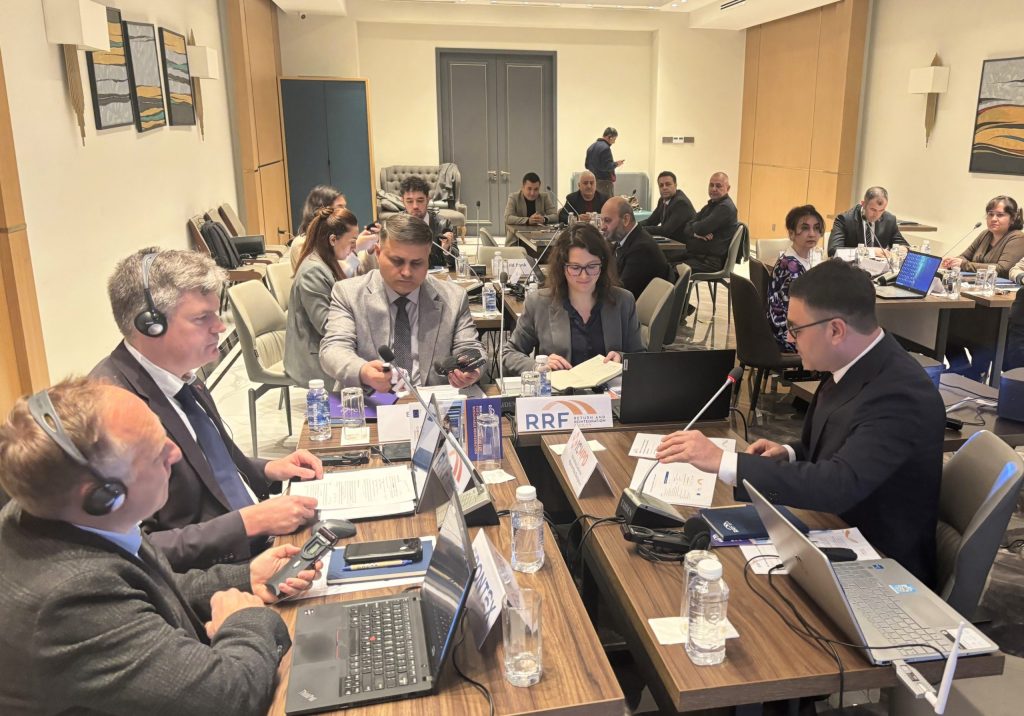
The briefing gathered more than 40 participants representing a wide spectrum of actors who were familiar with one another’s work but had never before come together in a single forum. Among those attending were government officials from the Ministry of Labour, Migration and Employment of Population of the Republic of Tajikistan, the Research Institute of the Ministry, and the Adult Training Centers. Representatives of local NGOs, such as Caritas Tajikistan, Gender and Development and Women in Society, as well as private sector partners joined the event. Finally, several international actors took part in the event, including the EU Delegation in Tajikistan, Frontex, IOM – UN Migration Tajikistan, the Asian Development Bank, and the World Bank.
The event featured presentations from different stakeholders, brainstorming sessions and a plenary session reconvening participants and their discussions. A key component of the programme involved building a shared understanding of the EU reintegration policy framework, with concrete examples of Frontex work in Central Asia and ongoing RRF initiatives in Georgia. These discussions enabled stakeholders to deepen their knowledge as well as to exchange practical examples and lessons learnt from their respective programmes.
Exchanges throughout the day highlighted the nuanced realities of reintegration in Tajikistan. While the country has established institutions and programmes supporting returning migrants, and the operating environment is replete with ongoing initiatives, participants emphasised the need for more streamlined coordination between government actors, civil society organisations, and international partners.
Way forward
The RRF extends its gratitude to ICMPD Eastern Europe and Central Asia and to the Migrant Resource Center colleagues for their collaboration, as well as to all representatives who contributed to the discussions. The momentum built during this briefing marks an important step toward more coordinated and impactful reintegration programming in Tajikistan. Stay tuned for more updates in 2026!