

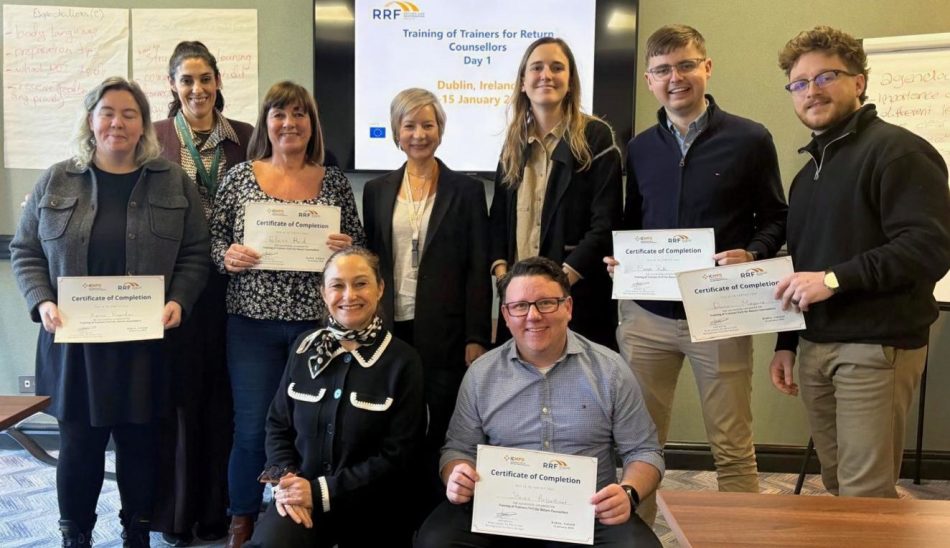
Since the beginning of the year, the Return and Reintegration Facility (RRF), in cooperation with national and regional partners, has delivered a series of specialised trainings aimed at reinforcing high-quality, rights-based return counselling practices across Europe. Implemented in collaboration with key national authorities and reception systems, these initiatives reflect a shared commitment to strengthening counsellors’ capacities, safeguarding migrant wellbeing, and promoting informed and sustainable return processes.
From piloting new methodologies to advancing trauma-informed approaches and building national training capacity, the sessions marked important milestones in consolidating professional standards in return counselling.
Training of Trainers in Ireland
RRF delivered a Training of Trainers (ToT) workshop to experienced return counsellors from the Irish Immigration Service. The interactive sessions focused on adult learning methodologies, practical training tools, and facilitation techniques aimed at enhancing participants’ confidence in delivering trainings themselves.
By reinforcing the capacity of already trained counsellors, the workshop contributes to the sustainable implementation of the RRF Action Plan in Ireland. Strengthening national training ownership ensures that knowledge and skills can be continuously transferred and embedded within existing institutional frameworks.
Advanced Communication Training in Sweden
In Stockholm, RRF facilitated an advanced communication training for return counsellors from accommodation centres across Sweden. Over two intensive days, participants explored communication methods that foster trust and constructive dialogue with potential returnees.
The training deepened counsellors’ understanding of vulnerability and strengthened their ability to provide tailored, supportive counselling throughout the return process. The sessions encouraged active participation, peer learning, and reflection on practical challenges faced in the field.
Delivered in close cooperation with the Swedish Migration Agency, the training further reinforced a shared commitment to ethical, rights-based counselling and professional excellence.
Specialised Training in Belgium
In Liège, a specialised training was delivered for return counsellors working in reception centres managed by Fedasil. Over the course of the sessions, participants strengthened their ability to identify psychological distress and less visible vulnerabilities, while enhancing sensitive communication skills to discuss return without re-traumatisation.
The training applied trauma-informed and psychosocially aware approaches to daily counselling practice and encouraged reflection on coordinated case management, referral pathways, and continuity of care. Dedicated sessions also addressed stress management, peer support, and burnout prevention—recognising the emotionally demanding nature of return counselling.
Open exchanges on complex cases and ethical dilemmas underscored the importance of inter-service cooperation and safeguarding both migrant wellbeing and staff resilience. Strengthening counsellors’ confidence and professional resilience remains essential to ensuring sustainable, high-quality reintegration support within reception systems.
Training on Return Counselling for Families with Children in Serbia
In cooperation with ICMPD Western Balkans and the Commissariat for Refugees and Migration, RRF conducted a dedicated training on Return Counselling for Families with Children in Serbia. The training brought together return counsellors working across the country and marked the first pilot of newly developed materials specifically designed to support counselling for families with children.
The sessions focused on strengthening counsellors’ role in supporting informed decision-making towards return, while ensuring a child-sensitive and human-rights-based approach. Particular emphasis was placed on safeguarding the best interests of the child, enhancing communication techniques, and equipping counsellors with practical tools to navigate complex family return contexts.
Piloting these materials represents an important step in refining methodologies and strengthening protection-sensitive practices when working with families and children.