

The first half of 2026 has been a milestone period for the Return and Reintegration Facility (RRF). Across return counselling and outreach, reintegration assistance, the Reintegration Assistance Tool (RIAT), and partner engagement, the semester combined the completion of long-running projects with new pilots and a high-level Expert Conference — building up, as of June 2026, to the formal transition into Cycle 2 of the programme and the close of RRF’s first implementation cycle.
Strengthening Skills on the Ground
Strengthening the skills of those who deliver return and reintegration counselling on the ground was a recurring initiative this semester.
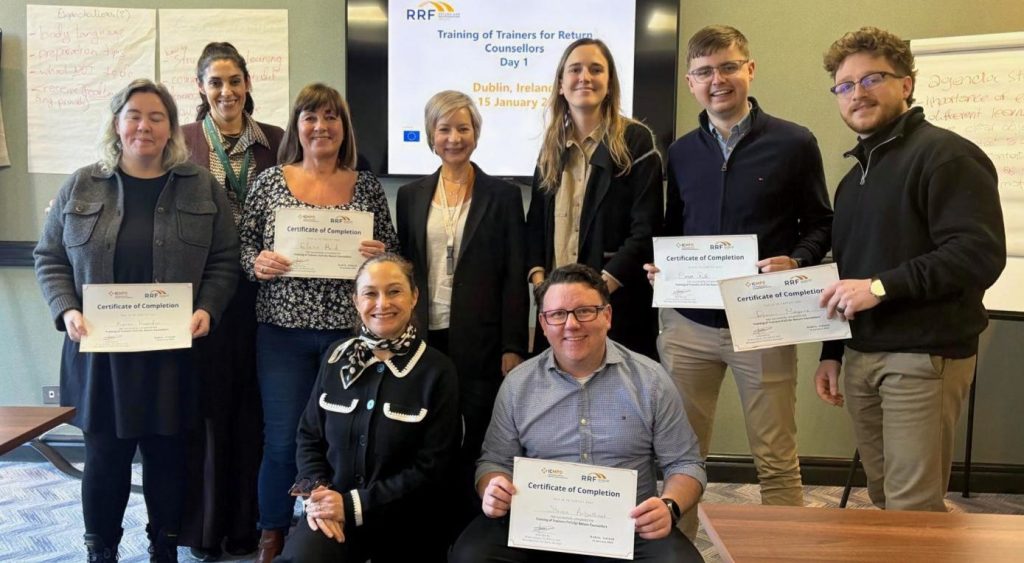
For EU Member States, the RRF carried this work forward directly: return counselling training sessions were delivered in Belgium, France, Iceland and Portugal, complemented by a comprehensive capacity development programme in Ireland to build a wider pool of qualified counsellors. Through a phased capacity-development approach, the RRF successfully supported Ireland in building return counselling capacity from the ground up by first training return counsellors and subsequently developing a cohort of national trainers through a Training-of-Trainers (ToT) programme, enabling the sustainable onboarding of newly recruited staff and contributing to Ireland’s preparedness for the operationalisation of the EU Pact on Migration and Asylum.
A training was also held in Serbia, extending similar support to a partner country in the Western Balkans. Peer learning was reinforced through a study visit organised in Denmark, where German counsellors had the opportunity to engage directly with the Danish return counselling system and exchange practice with their Danish counterparts.
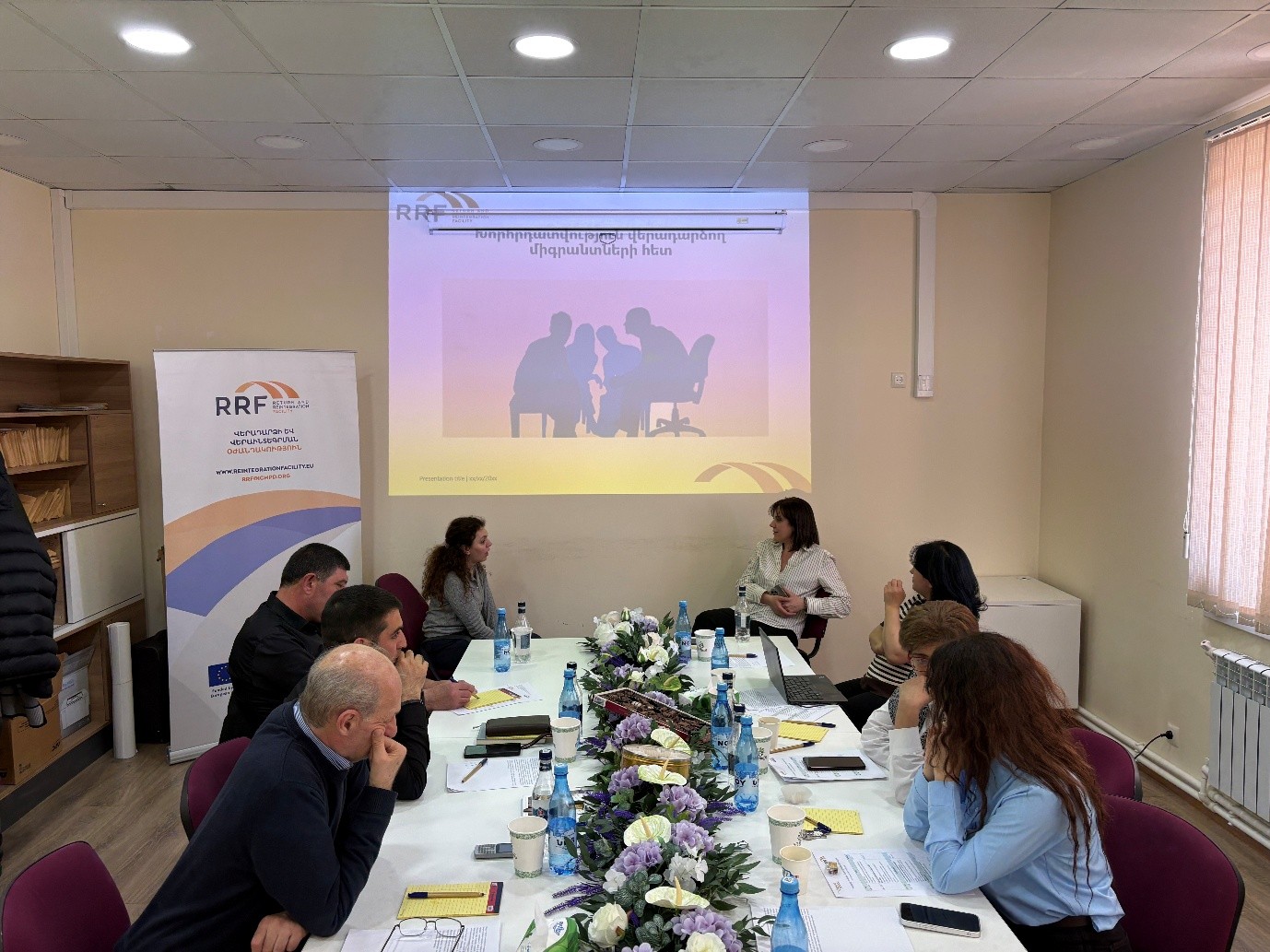
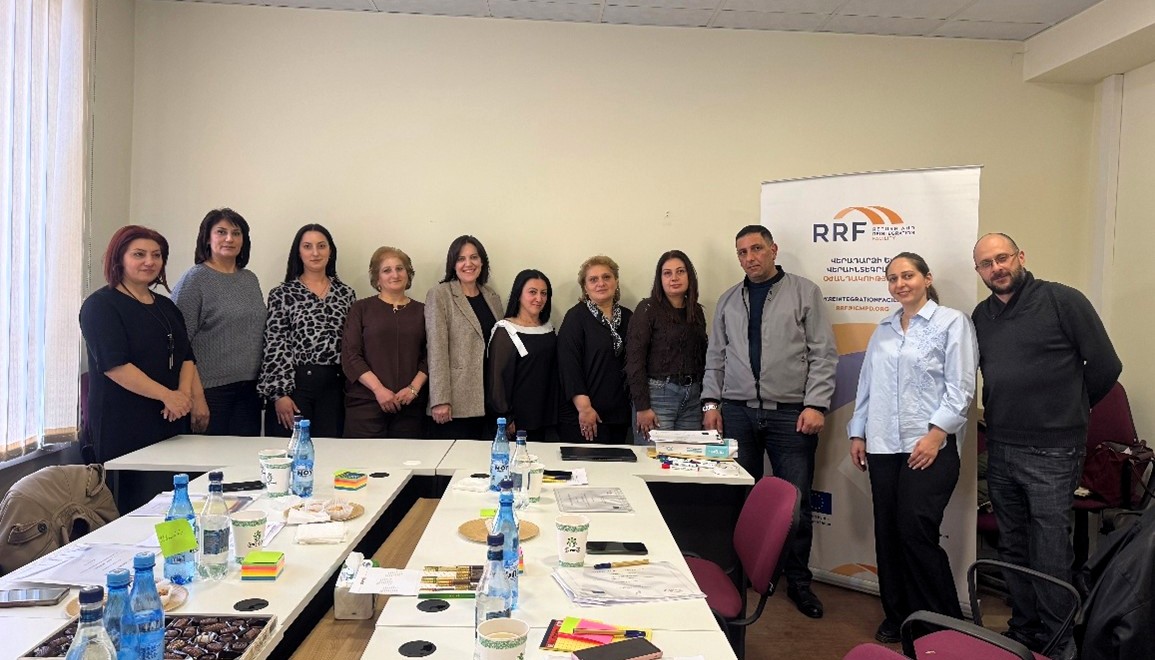
In Armenia, the LOSRA project completed a capacity-development programme for the Unified Social Services (USS), which took over reintegration service delivery after a 2024 government reform. Between April and mid-May 2026, LOSRA delivered five regional trainings, reaching more than 40 social workers and case managers — bringing the total to six trainings and roughly 70 professionals trained since 2024, with uniformly strong satisfaction results.
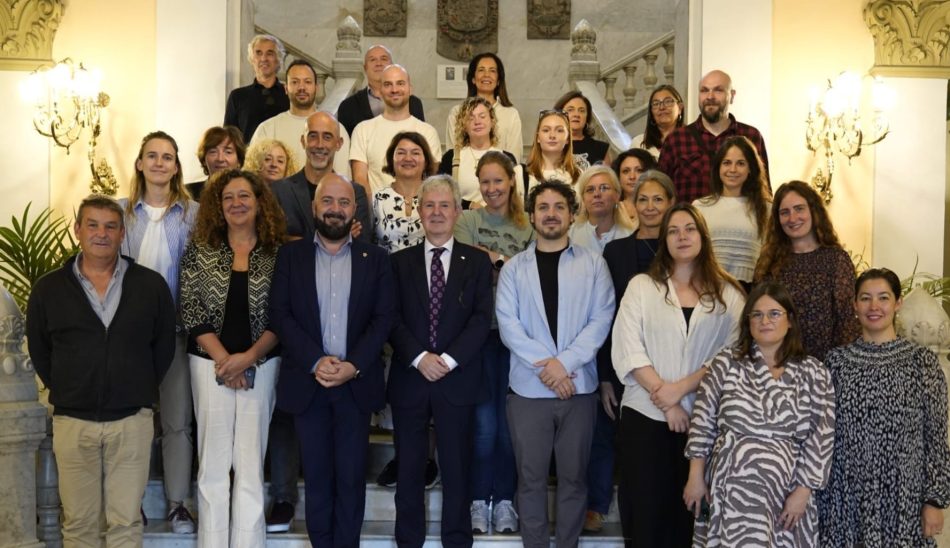
The Support to Frontline Workers (SFW) project also concluded this semester, on 1 June. Two study visits anchored its final stretch: at the end of January, a visit to Milan examined the city’s co-design approach to integrated frontline services, while a further visit to Malta explored its centralised counselling model. Together with earlier work in Bilbao, these fed into the project’s final policy brief, Beyond Procedures: How Multi-Level Governance Shapes Outreach and Assisted Voluntary Return Counselling at the Local Level, presented at a closing session on 27 May with participants from 13 EU+ countries.
One Project Closes, Another Begins
The semester saw one flagship project conclude and a new one launch.
The OFII Referral Desks activities, implemented with the French Office for Immigration and Integration (OFII), was marked as complete in May 2026. Over its lifetime, this project assisted more than 800 returnees across Georgia, Côte d’Ivoire, Senegal, and Cameroon, testing innovations including psychosocial support, peer mentorship, and an environmental/business pilot, alongside national health insurance coverage support for 100 returnees in Senegal and Côte d’Ivoire and training sessions delivered to over 400 returnees, together with the experience gained through the LOSRA project in Armenia, are now feeding into the design of a new Referral Desks model — combining lessons from both the OFII Referral Desks and LOSRA approaches into a more harmonised and standardised way of organising referrals in countries of origin.
At the same time, the RRF launched a new pilot: the Cashless Transfer Project (CTP), introducing secure, digital payments for returnees in Georgia, Iraq, Jordan, and Syria. RedRose, a specialist provider in digital cash transfer and aid delivery, was contracted to deliver the pilot, offering country-tailored payment solutions. The pilot is generating early lessons learned and laying the groundwork for a scale-up: a priority area for MS heading into Cycle 2.
Scaling Up RIAT
The Reintegration Assistance Tool (RIAT) kept expanding through the semester. New platform functionalities now allow direct case assignment through the dashboard and more efficient handling of urgent actions, while a new Data Collection Framework is being developed to improve the consistency and comparability of case data. Regular webinars and exchanges with MS and reintegration partners are planned to support the growing user community.
Geographically, RIAT’s reach grew further with a new national project from Ireland’s Department of Justice, Home Affairs and Migration, extending coverage to Botswana, Chile, South Africa, and Zimbabwe, with flexibility to add further countries as needed. Capacity-building also continued, including a dedicated RIAT workshop for Serbia’s Commissariat for Refugees and Migration in Belgrade, introducing the platform’s case management and coordination functions.
Brussels Brings the Field Together
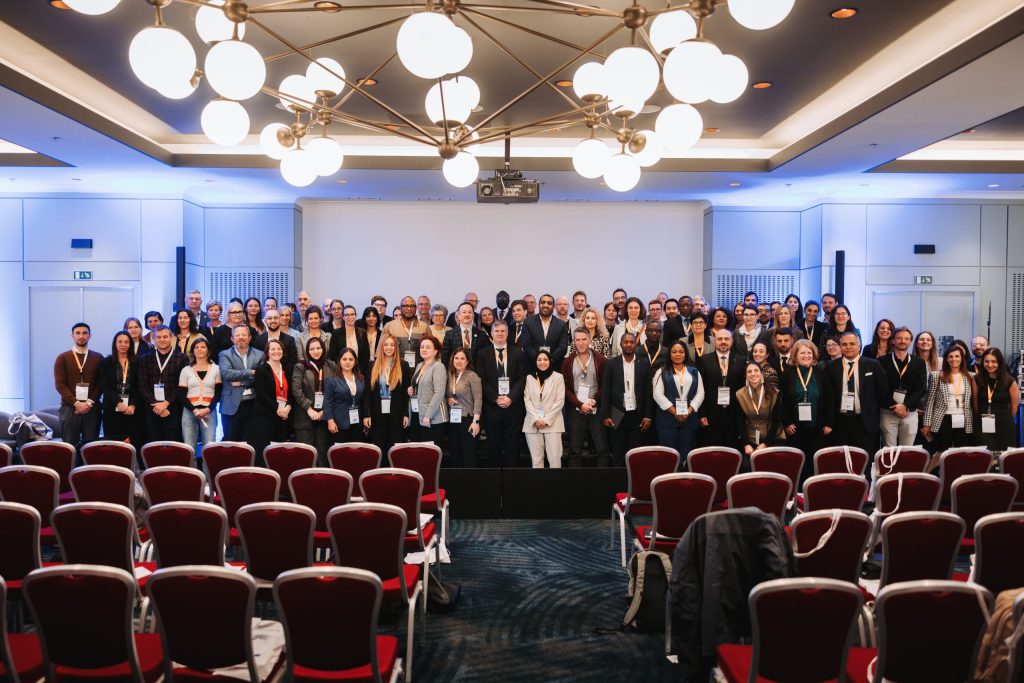
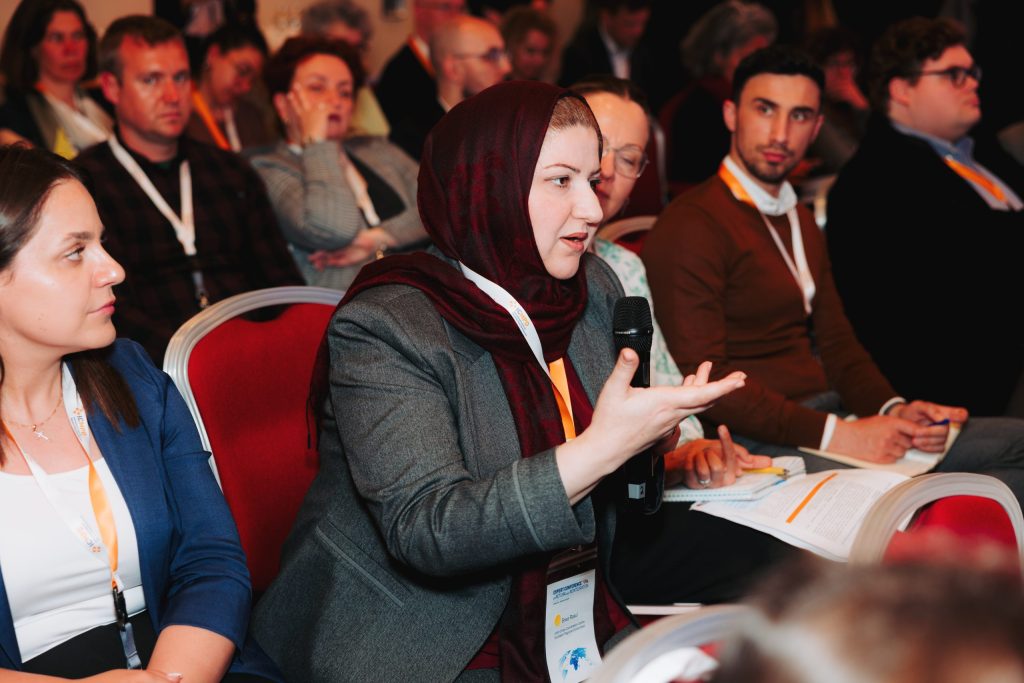
The semester’s clearest highlight on partner engagement was the Expert Conference on Return and Reintegration, held in Brussels on 21 April and organised with Fedasil and the Migration Policy Institute Europe. More than 110 participants attended, drawing together EU Member States and Schengen Associated countries, partner countries, civil society organisations, international and development organisations, and research institutions.
The Conference came at a particularly timely moment, just weeks ahead of the Pact on Migration and Asylum entering into application on 12 June 2026, and as the European Parliament gave its final approval to the new Return Regulation that same month — both developments with direct implications for how return and reintegration systems will function in practice. Rather than a showcase of achievements, the day was structured around honest, practical exchange. Three panels (policy, evidence, and operational) examined the persistent gap between policy ambition and operational reality, how evidence is (and is not) feeding into decision-making, and the recurring challenge of treating return and reintegration as continuous rather than sequential processes. Breakout sessions went deeper on referral systems, vulnerability-responsive support, Pact implementation, and digitalisation via RIAT.
The European Commission underlined the Facility’s role going forward: Ionut Mihalache, Policy Officer at DG HOME, noted that the RRF is expected to keep delivering innovative solutions for the common European system, with a strong focus on further developing referral systems. As the RRF enters its new cycle, bringing together this breadth of stakeholders remains essential to keeping policy and practice aligned. A full takeaways report capturing the day’s discussions is available for those looking to go further.
Turning the Page to Cycle 2
With these projects concluding and consolidating in parallel, June 2026 marks the formal transition from Cycle 1 to Cycle 2 of the RRF — closing out the Facility’s first implementation cycle and opening the next phase of the programme.
This semester is a strong illustration of what the RRF will continue to strengthen and prioritise going forward: capacity development on return counselling, referrals, and engagement between host countries and partner countries, alongside the continued development of RIAT. Cycle 1 was a rich period that generated a wealth of lessons learned, many of which are already being reinjected into how these activities are being reconceptualised for Cycle 2. We are enthusiastic for the months ahead!